Skip to content

Catskills Hearth

  • Home
  • Nature & Practices
    • Nature
    • Wheel of the year
    • Elements
  • Creative Corner
    • Art
    • Poetry
    • Songs
  • Divination
    • Tarot
    • Moon Phases
    • Ogham
  • About
  • Home
  • 2021

Year: 2021

Celebrating Yule – The Winter Solstice

Posted on November 8, 2021October 8, 2026 By Davy Russell 2 Comments on Celebrating Yule – The Winter Solstice
Celebrating Yule – The Winter Solstice
Nature & Practices

Dates: 2024: December 21

The days grow shorter, and the nights grow longer. Winter gains strength. The Wheel turns and we arrive at Yule – the Winter Solstice. The shortest day of the year.

Yule is a 12-day period of reflection and celebration that begins at the winter solstice and continues through the end of the calendar year (December 31st).

Yule is the oldest pagan festivals, from which most Christmas customs derive.

What Yule Represents

Yule celebrates the return of the sun.

The Winter Solstice is the shortest day of the year. At this point of the year, the sun is at its lowest point in the horizon at noon, and the period of daylight is at its shortest.

Each day after the winter solstice, the days will grow gradually longer as the sun’s path arcs higher and higher in the sky.

Yule is a time for celebrating light, gift-giving, gathering with family and friends, and celebrating the “rebirth” of the sun.

Personally, Tracy and I reflect on the end of the previous year, and prepare for the start of a new year and a new cycle.

For us and our practice, Yule marks the first spoke (or beginning) of the pagan Wheel of the Year (although some witches and pagans consider Samhain to be the beginning of the year).

Keywords: Hope, expectation, joy, peace, gathering, family, rebirth, renewal, light.
Yule Correspondences

Moon Phase: Yule corresponds to the New Moon, a time to set intentions and make new starts.

Element: Earth

Colors: Red, green, gold, silver, blue, and white are all colors to use for candles and decorations this time of year.

Crystals/Stones: Clear quartz, snow quartz, obsidian, citrine, orange calcite, fire agate, fire opal, pyrite, and red jasper are my favorite crystals to put out and work with this time of year.

Black moonstone is another crystal that I work with during each new moon, but also at Yule. Black moonstone is a crystal of intention, hope, manifestation, and new beginnings.

Herbs: Peppermint, cinnamon, clove, and ginger are the herbs I work with at Yule – especially in cooking, teas, and other herb-crafts.

Incense/Essential Oils: Fir, pine, cedar, juniper, cedarwood, peppermint, cinnamon, clove, and orange.

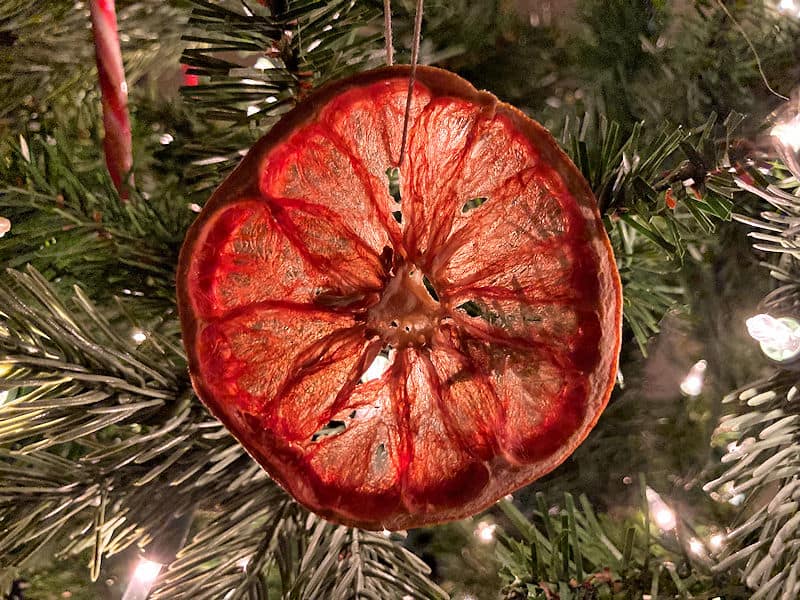
Other Magickal Earth Items: Evergreen boughs, pine cones, holly leaves/berries, ice/snow, yule log, poinsettia, reindeer, citrus fruits.
Yule Rituals: How To Celebrate Yule

Tracy and I still celebrate Christmas on December 25, as that is the holiday we grew up with.

For us, Christmas is more of a secular, cultural holiday than a religious one – and we have no problem with immersing ourselves in the festivities of the holiday season.

Besides, many of the holiday symbols and customs we associate with Christmas today were borrowed from much earlier, pagan practices.

We have incorporated a few of our own spiritual, mindful practices during the Yule season.

Create A Yule Altar

In addition to our Christmas tree and decorations, we set up a Yule altar.

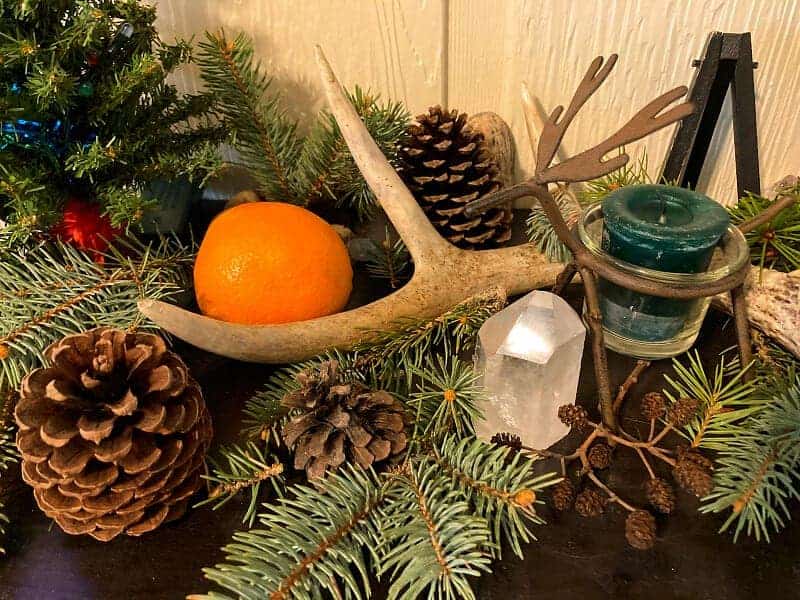
Our altar includes red, green, and white candles, a deer antler, a mini, artificial Christmas tree, evergreen boughs (Douglas fir, cedar, juniper, pine), pine cones, sprigs of holly, and crystals that correspond to Yule.

We also place solar symbols on our altar at Yule. I usually place a fresh orange (representing the sun) on top of a holly leaf as a nod to the story of the Oak King defeating the Holly King at the solstice, ushering in the new year and the strengthening sun.
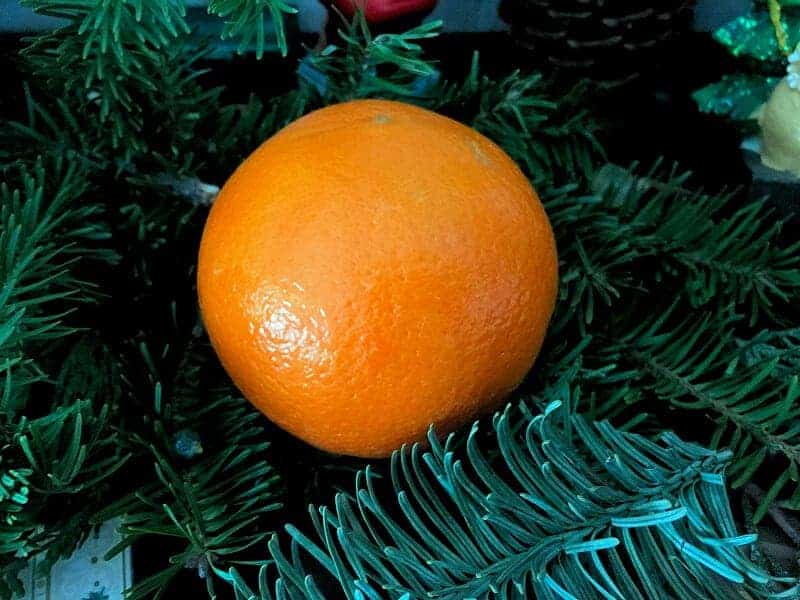
An orange placed on top of a holly leaf symbolizes the rebirth of the sun, and the mythological rebirth of the Oak King upon the defeat of the Holly King.

Decorating For Yule

Evergreen boughs, garland, and wreaths are perfect Yule decorations, as well as sprigs of holly and mistletoe.

A Christmas (or Yule) tree is the centerpiece of our home at this time of year.

Because the nights are long, we light a lot of candles – particularly white, but red and green are also favorite colors.

Craft A Yule Log

There are two approaches to enjoying a Yule Log, and that depends on whether or not you have a wood-burning fireplace. If you do, simply pick a log that “calls to you” and burn it on the Solstice.

You can burn a specific type of wood that corresponds with your intentions for the Yule season and new year.

For those of us who do not have a wood-burning fireplace, then the next best thing is to forage for a log of workable size, and drill holes in it to stick candles into.
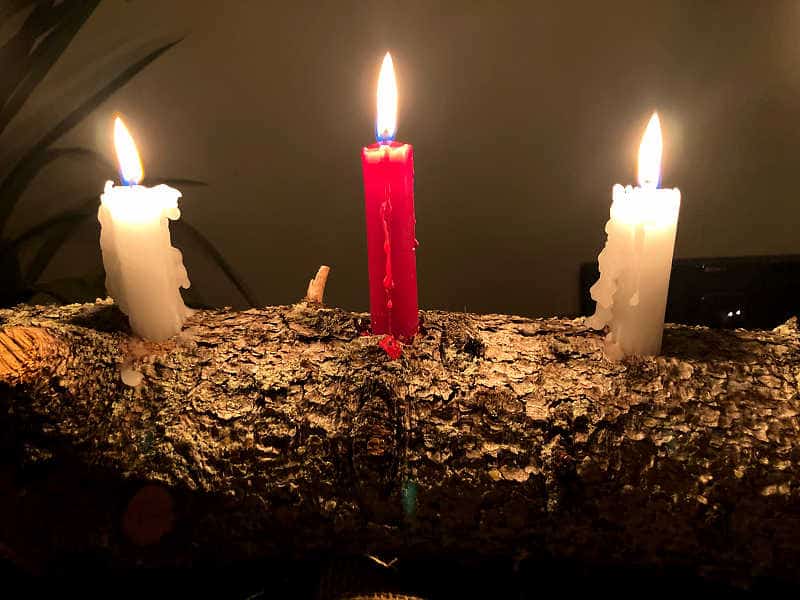
This year, we used a piece of cut spruce from a tree that blew down in our yard during a windstorm over the summer. I didn’t have a large enough drill to fit the diameter of a taper candle, so I drilled a bunch of smaller holes to create large ones.

Traditionally, red (for the Holly King), green (for the Oak King), and white (for the cold) candles are used. However, you can use other colors that suit the meanings or intentions that you set during the Yule season. For example, yellow or gold can represent the returning sun.

In our case, on-going pandemic supply chain issues meant that we had to settle for just white and red candles this year.

Solstice Crystal Ritual

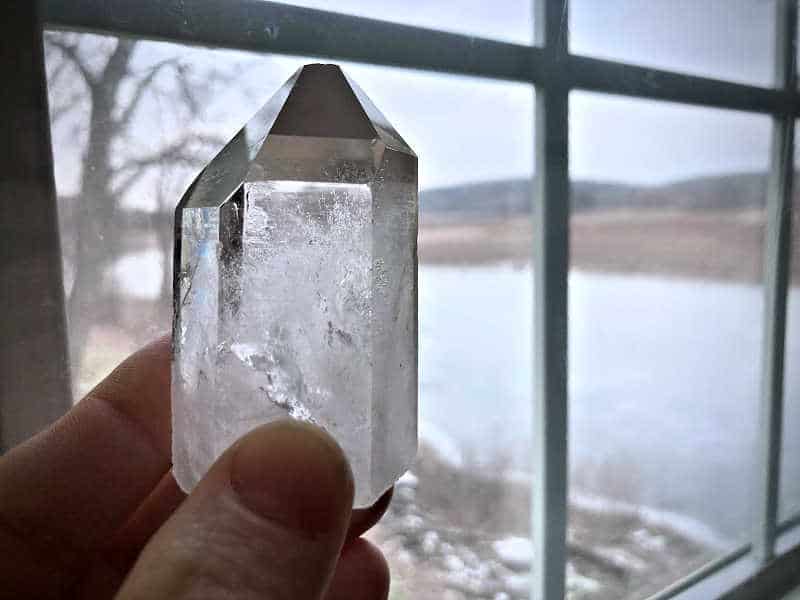
On the night before the Winter Solstice, I place a clear quartz crystal on the windowsill of our East-facing window. As the sun rises on the solstice, the crystal catches the very first rays of light from the reborn sun.

I then use this crystal for intention work during the Yule season.
Brew A Simmer Pot

You can brew a simmer pot any time of year, but there is no better way to fill your home with the aroma of Yule than to fill a small crock pot or pan with fruits and spices!

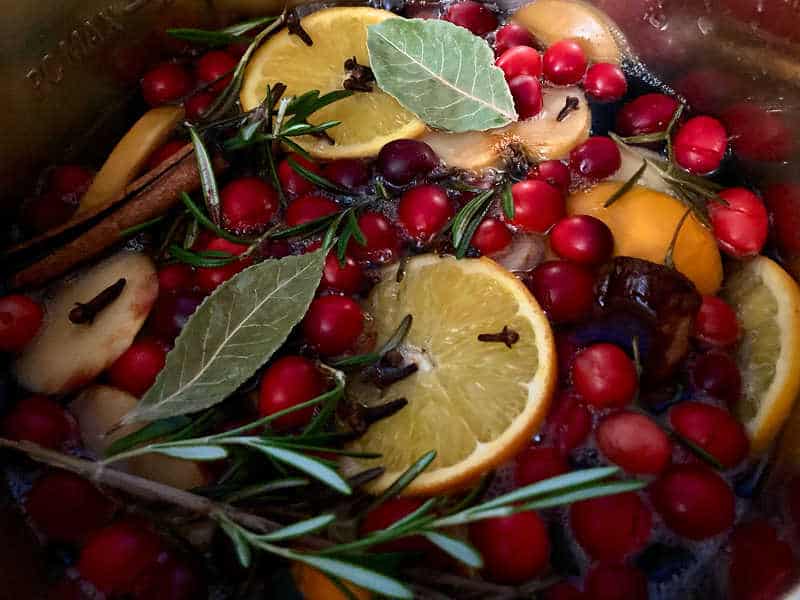
We made a simmer pot with oranges, apples, cranberries, rosemary, cinnamon sticks, cloves, and bay leaves.

Set intentions as you place ingredients into the pot. For example, oranges represent the returning sun. Cinnamon adds power to your intentions. Cranberries represent abundance, courage, and action. Bay leaves are often burned at new moons and to make wishes. Cloves are a healing herb that offers safety and protection.

Simply fill a pot with water and simmer under low heat for as long as you’d like. You can reheat the simmer pot up to 3 days.
Set Intentions For The New Year

Most of us do this during the New Year holiday anyways, but I view the Winter Solstice as the start of the new year since it’s the beginning of a new solar cycle.

Yule is the time to set intentions for the coming year. It’s a great time to commit or re-commit to a goal, or change in your life.

Be sure to write these intentions down (on paper or bay leaves) and either burn them, or place them inside a bottle, box, or cauldron (with lid) with manifestation crystals like clear quartz, pyrite, citrine, green aventurine, or green chert.

Giving

Yule is a season of giving. If you are able, exchange gifts with family and friends, but be sure to also remember those who are less fortunate.

Tracy and I always donate to the local food bank and place toys in the Toys For Tots bin.

Gathering

Yule (and the adjacent holidays) are a time to gather with family and friends for food, fun, and catching up.

Make Solstice Candles

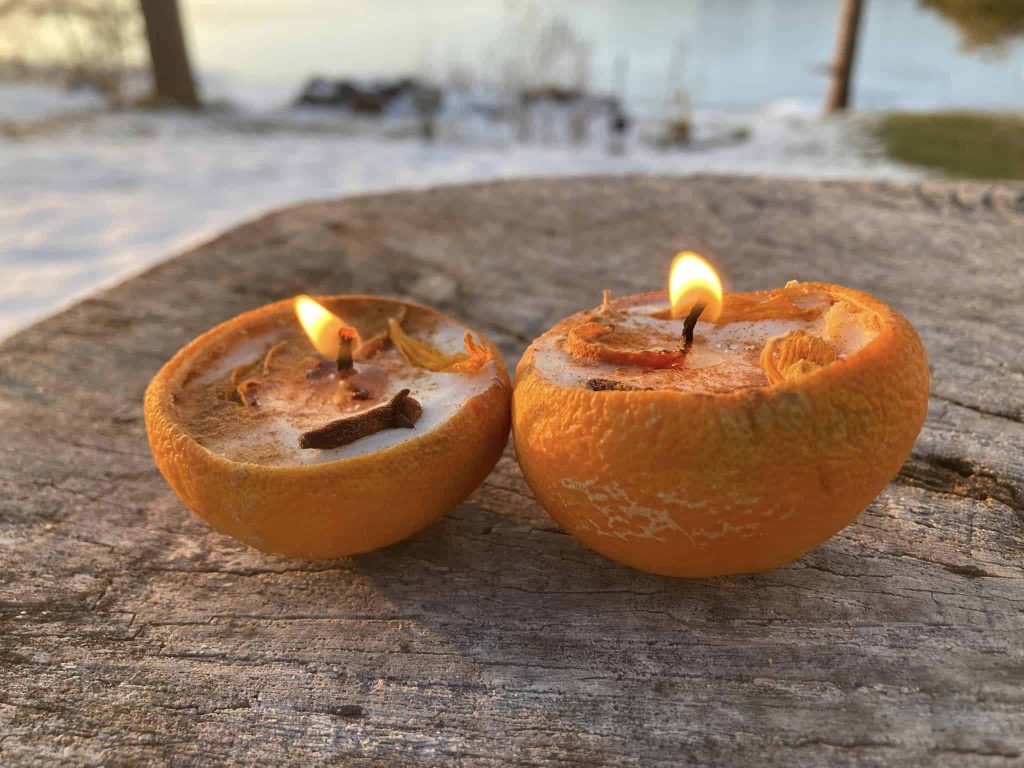
Tracy and I like to make simple Solstice candles that we put intentions into and burn on the Winter Solstice.

You can burn them at sunrise on the day of the solstice. Or you can light them in the evening at sunset. Or anytime that is more convenient for you.

Don’t get hung up on making the ritual “perfect” or “correct”. Simply lighting this candle at any time and reflecting on your intentions for the coming year is more than enough.

To make the candle:

1 – Cut an orange in half and carefully scoop out the fruit, leaving only the peel.

2 – Pour a small quantity of candle wax almost to the top of the orange half. Be sure the orange half is supported so that it doesn’t tip and spill the wax as you pour it. Place a wick in the center.

If you do not have candle-making supplies, you can use a tealight or the end nub of a taper candle.

3 – Sprinkle some cinnamon, place a clove bud, and/or add any other herbs/crystals you wish to add to support your Solstice intentions.

4 – When the wax has hardened, simply light the candle and let it burn until it extinguishes itself. (Be sure to practice fire safety, keep away from children/pets, and burn in a heat-safe, fireproof container within sight.)
Phenology

Phenology is the study of cyclical patterns in the natural world around you. As I celebrate each holiday on the Wheel Of The Year, I take note of the changes in the environment around me.

What flowers (if any) are blooming at Yule? What birds or other animals are active? What time does the sun rise and set? What are the temperatures? Take note of what is happening outside your window!

While no flowers are blooming in our frozen, sometimes snow-covered garden this time of year, migratory ducks and geese are active on the river outside our home. We frequently see bald eagles hunting.
Celebrating Litha: The Summer Solstice

Posted on June 11, 2021October 8, 2026 By Davy Russell No Comments on Celebrating Litha: The Summer Solstice
Celebrating Litha: The Summer Solstice
Nature & Practices

Date: June 21, 2022

The days are long, the sun is hot, the garden full, and nature buzzes with constant activity.

It’s the Summer Solstice – symbolizing fulfillment, abundance, life, energy, and blessings.

Often celebrated as Litha, or Midsummer, the Summer Solstice is one of the eight sabbats on the pagan Wheel of the Year.

Themes & Meanings For Litha

Litha marks the longest day of the year, where the sun is at its strongest, and nature fully alive and active.

The promise of Imbolc (February 2nd) is finally fulfilled as we bask in long days, warmth, and plenty.

The themes that Tracy and I reflect on during Litha are:

Fulfillment

It’s a good time of year to check in with what makes us feel fulfilled.

Is your hard work paying off? Do you feel fulfilled? Are you enjoying the journey?

Summertime beckons for us to be present and enjoy life, so if something is preventing you from feeling fulfilled and joyful, it’s time to do a gut check and make some course corrections.

Gratitude

We often associate gratitude – or thanksgiving – with the late summer and autumn sabbats of Lughnasadh and Mabon.

However, the Summer Solstice is the perfect time to sit back and take in all of the lush beauty of summer – the flowers, the fragrant herbs growing in your garden, the sunlight glinting on the water – take it all in and be thankful for everything you have – no matter how small or insignificant it might be.

Joy & Happiness

Another theme of Litha is joy and happiness.

Summer is often a joyful time, and while current events in the world, or your present life circumstances, might make it difficult to be joyful, it is possible to find bits of joy and peace if you embrace the present moment.

What truly makes you happy? What brings you joy? What are the most important things in your life?

Write these down and take time to truly appreciate them.

Better yet, give yourself permission to spend more time doing things you enjoy, and work toward balance between work and play.

Nurturing Our Dreams

Winter is a time for planning and intentions setting, and we start putting things in motion during the spring.

The summer is a time to tend to and nurture what we want to grow in our lives.

It’s time to balance self-care and rejuvenating play time with the hard work and dedication that it takes to continue the work of fulfilling what we want to manifest in our lives.

Just as the farmer or gardener waters, prunes, and protects their crops, so too must we protect, grow, and nurture our self-growth and positive, forward direction.

Correspondences & Setting Up A Litha Altar

One of the simplest ways to honor the Summer Solstice, or to celebrate Litha, is to create a simple altar that features meaningful elements of the season.

Moon Phase: Litha corresponds to the Full Moon, a time of celebration, joy, gratitude, and reflection.

Candles: Lighting candles is a great way to bring that fiery, solar energy into your home – especially during Litha rituals performed indoors, or if it is cloudy or rainy on the solstice.

My favorite candle colors to use on the Summer Solstice are gold, yellow, orange, and green.

Crystals & Stones: Any stone associated with prosperity, joy, and happiness or luck are good stones of wear, carry, or decorate with during Litha.

Citrine, orange calcite, and pyrite all are associated with prosperity, abundance, and joy.

Both fire agate and fire opal represent the fiery energy of the sun, as is tigers eye.

Green stones like emerald, green aventurine, jade, and green kyanite all represent the abundant, green energy of the Earth.

Amber, a fossilized resin, is a good stone to work with at Litha to reflect on ancestors, and how past cycles lead us to where we are now.

Herbs: By the Summer Solstice, both calendula and chamomile are blooming in my garden.

Calendula flowers can be brewed in a tea and have a host of health benefits.

Chamomile helps you relax – use it to take a time out during the summer to enjoy life.

Other herbs I use or work with during Litha include mint (especially lemon balm), lemon verbena, lavender, and St. John’s Wort (Hypericum perforatum).

Calendula is a wonderful herb to work with at Litha.

Flowers: Besides flowering herbs like chamomile and calendula, roses and daisies are in full bloom in my yard and garden at this time, and so I like to incorporate them into my Litha decor and rituals.

Scents (Incense/Essential Oils): Lemon (any citrus), sage, pine, lavender, cedar, and frankincense.

Foods: Early summer fruits and vegetables, herbs, iced tea.

My favorite Litha tea is made from two cups of packed lemon balm leaves steeped in two quarts of hot water for 15 minutes, then allowed to chill.

Altar Decor: Roses, yellow and orange flowers (calendula, marigolds, rudbeckia, sunflowers), berries, yellow discs or other solar images/symbols, oak leaves and holly leaves (representing the cyclical battle between the mythological Oak King and the Holly King.

Suggested Rituals

You do not need to perform a fancy ritual to “properly” celebrate Litha, or the Summer Solstice.

Here are some simple, quick ideas to help you connect to the Longest Day.

1) Visit A Farmer’s Market

Visiting a local farmer’s market is an excellent way to connect with the beginning of summer – especially if you do not have your own garden.

Be sure to pick up some early summer fruits and vegetables, and gather some ideas and inspiration for a midsummer, locally-sourced meal.

2) Harvest Some Herbs (& Cook With Them or Brew Tea)

If you have an herb garden, pick some of the herbs and cook with them, or brew tea.

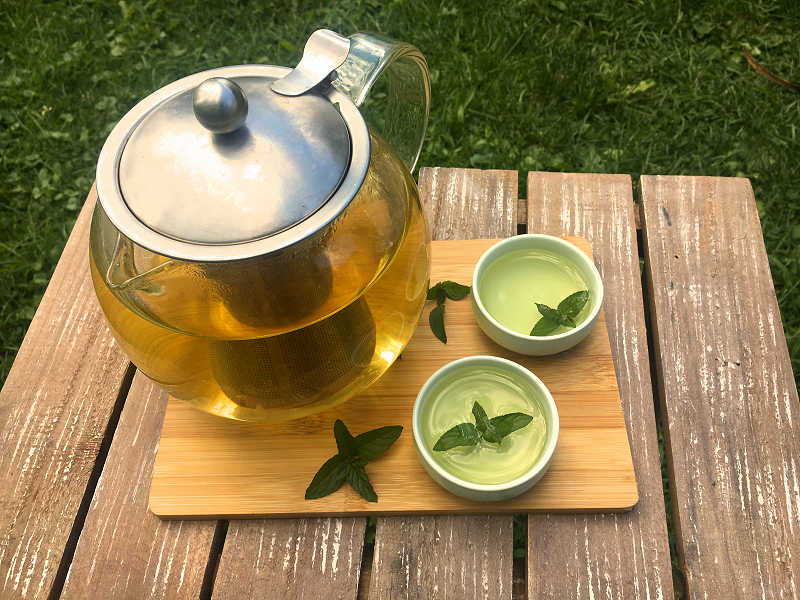
I now have a tradition of making a big batch of lemon balm iced tea for the summer solstice.

I grow, brew, and drink my own teas all summer long. My favorites are peppermint/chocolate mint, apple mint, lemongrass, lemon verbena, and lemon thyme.

If coffee (or espresso) is more your thing, you can make a floral-infused coffee or latte using ingredients in from your herb garden.

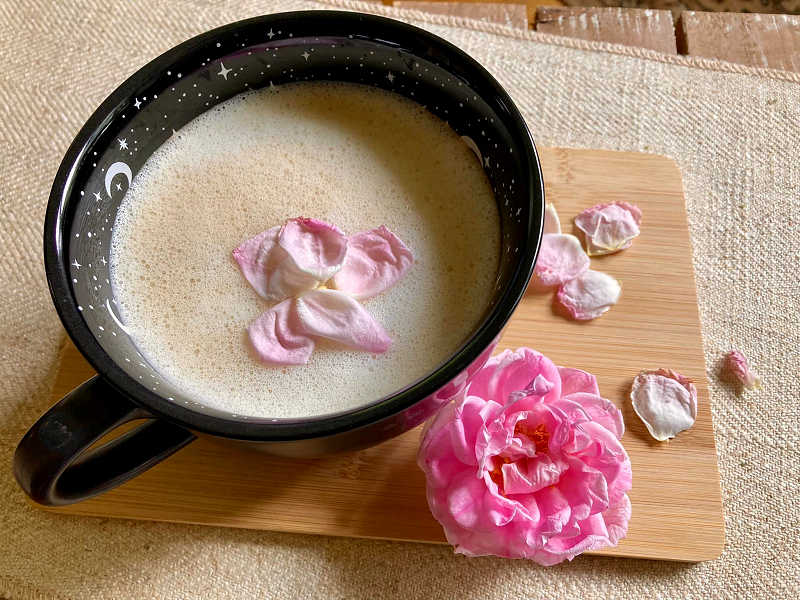
Tracy and I made a delightful rose petal-infused latte by simmering freshly picked rose petals from our rose bush in oat milk.

I heated the oat milk and kept it warm/hot (not boiling) for about 10 minutes to allow the rose petals to infuse into it.

Using a milk frother, froth the the hot oat milk (you can use any milk for this) until light and foamy.

Pour a shot of espresso (or strongly brewed coffee) into your cup, then slowly pour in the oat milk.

Sip and enjoy, outside by the garden, if you can.

Rose petal latte.

3) Journal

The simple act of cracking open a journal and checking in with yourself can bring about a lot of clarity, calm, and focus on what you need to release, embrace, and shift in your life.

Ask yourself the questions I posted earlier in this article.

4) Take a Gratitude Walk

Litha is about counting your blessings and enjoying abundance (not just financial abundance, but an abundance of anything – love, flowers, iced tea, etc…).

Take a walk through your neighborhood or local park, or if you’re feeling ambitious, go on a hike. Be sure to list off all the things you’re grateful for while you walk.

5) Sit Outside & Take In The Sights, Sounds, Smells

One of the themes of Litha is nurturing and growing what you want to manifest in your life, but it’s also important to balance hard work with self-care and play.

If you are able, go camping. Take a trip. Take a day or two off to do nothing but read by a lake, or play.

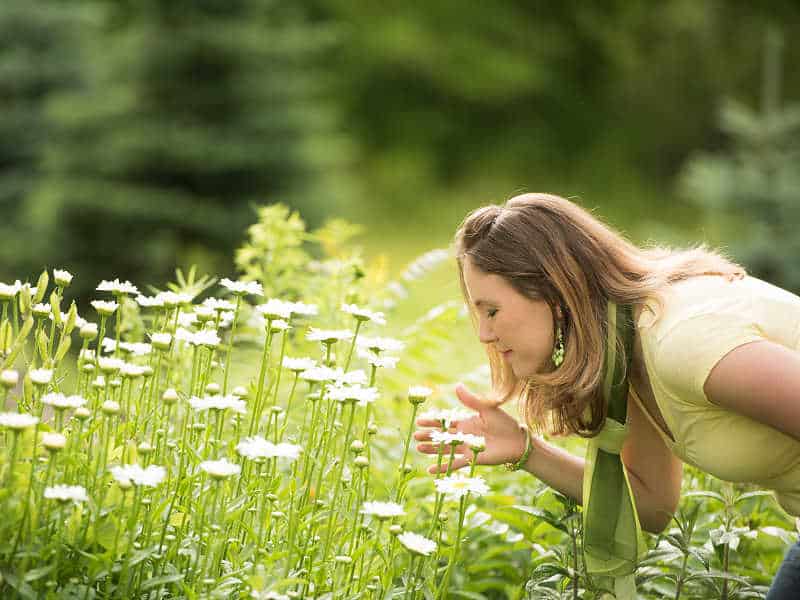
Or simply carve out a few minutes here and there throughout the day to step outside and pause. Find out what’s blooming in your yard or neighborhood.

Put down your phone (or leave it inside), and just be present and observant – and take a moment to simply appreciate being alive.

Recent Posts

  • New Moon In Libra
  • The Ultimate Guide To Working With Moon Phases
  • Honoring The Four Elements: Earth, Air, Fire, Water
  • The Wheel Of The Year
  • Beltane: How We Celebrate & Simple Rituals

Recent Comments

  1. Davy Russell on Celebrating Yule – The Winter Solstice
  2. Terez on Celebrating Yule – The Winter Solstice
  3. Ashley on The Ultimate Guide To Working With Moon Phases
  4. Alex on The Ultimate Guide To Working With Moon Phases

Archives

  • October 2026
  • February 2024
  • January 2024
  • December 2023
  • April 2023
  • October 2022
  • August 2022
  • July 2022
  • March 2022
  • January 2022
  • November 2021
  • June 2021
  • April 2020

Categories

  • Divination
  • Nature & Practices

Copyright © 2026 Catskills Hearth.

Theme: Oceanly Green by ScriptsTown