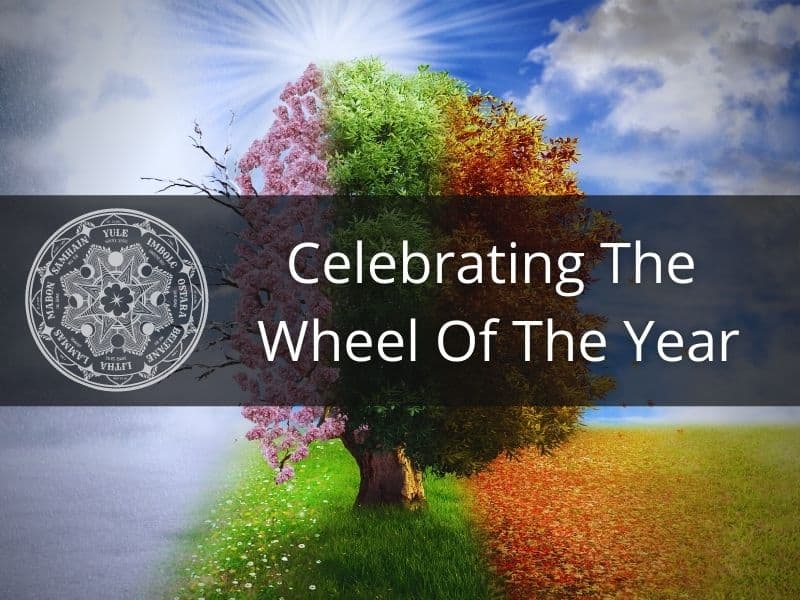
In modern paganism, the Wheel of the Year is an annual cycle that includes eight holidays (or sabbats) that occur in roughly 6-week intervals.
They include the four solar (quarter) days of the winter and summer solstices, as well as the spring and autumn equinoxes.
Four “cross-quarter” days fall between the solar holidays and include Imbolc, Beltane, Lughnasadh, and Samhain.
The modern, pagan Wheel of the Year draws inspiration from ancient Celtic, Germanic, and Norse holidays. However, it is essentially a modern creation that is popular in Wiccan, as well as an eclectic array of modern pagan paths.
That being said, the modern Wheel of the Year offers a wonderful framework for connecting to the seasons, providing regular points throughout the year to check in and harmonize with the rhythms and cycles of the seasons and land around you.
NOTE: This article provides a brief overview of all eight holidays of the Wheel of the Year. Click the links for more on each holiday, including a deeper dive into the themes, sample rituals, and correspondences for each one.
When Does The Wheel Of The Year Begin?
If you are new to following the Wheel of the Year, it is not necessary to wait until the official start to the year. Jump in whenever! The very first holiday I celebrated was Mabon, and I sometimes refer to Mabon as my “paganniversary.”
As for when the “official” start of the Wheel of the Year begins, that’s really up to you.
Traditionally, either Yule (The Winter Solstice) or Samhain (ie: Witches New Year) begin the annual cycle. Choose whichever one makes the most sense to you, and that feels right.
For me, Yule is the start of the new year. It fits with the “birth of the sun” as it begins a new solar cycle. Yule corresponds to the new moon in a lunar cycle, a period of rebirth and beginnings.
The winter solstice also occurs close to the calendar New Year, as well as the New Moon in Capricorn – a new moon associated with setting intentions for the year and creating long-term goals.
Here is a brief summary of each of the holidays on the Wheel of the Year, with links for more info and ritual ideas.
Dates vs. Seasons
In the article below, I’ve included dates for each holiday on the Wheel of the Year for both Northern and Southern hemispheres.
However, you do not need to stress about celebrating festivals ON the actual day (or even at the exact time they are supposed to occur (ie: the exact moment of the winter solstice, for instance).
Instead, I encourage you to think of each spoke on the Wheel as the beginning (or high-point) of a season.
It’s okay if you are busy or can’t make a big deal on the typical or traditional day of a holiday. Observe it in your own way on or around the time of the holiday. Think of it as a season and not just one day (and something you might miss).
Okay, let’s begin our tour around the Wheel of the Year. Let’s begin at Yule…
Yule – The Winter Solstice
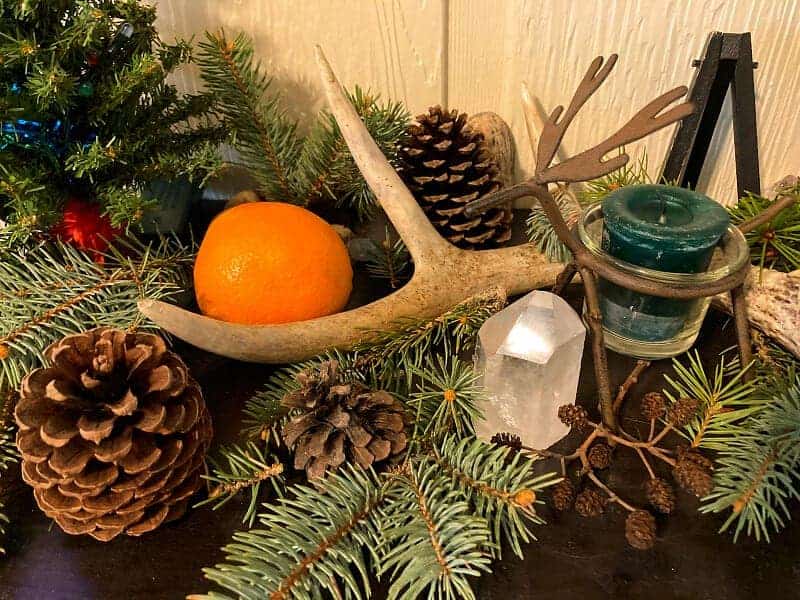
The spiritual year begins for me at the Winter Solstice – the first day of Yule.
The modern Druid name for this holiday is Alban Arthan.
Dates
Northern Hemisphere: Typically observed between December 19-21, on the day of the winter solstice.
Southern Hemisphere: Typically observed between June 19-21.
The winter solstice marks the shortest day of the year and the longest night. It is the beginning of a new solar cycle in the Northern Hemisphere. After this date, the daylight hours will begin to increase.
Yule begins at the winter solstice and continues on for 12 days – usually through New Years Day on January 1 (in the northern hemisphere).
I often extend the Yule season through the New Moon in Capricorn if it occurs after January 1.
General Meanings and Themes
Yule is a time to set intentions for the coming year.
Corresponding to the new moon phase, the solstice is a time of quiet reflection, joyful gathering, and aligning your energy with the rising sun, ushering in new beginnings and fresh starts.
How to Celebrate
Yule shares many of the same holiday activities and traditions that Christmas does (the latter holiday borrowing heavily from the former when pagan Europe was Christianized during Roman times.)
Click here for a deep-dive into celebrating Yule and the winter solstice, with ritual ideas and correspondences.
Imbolc
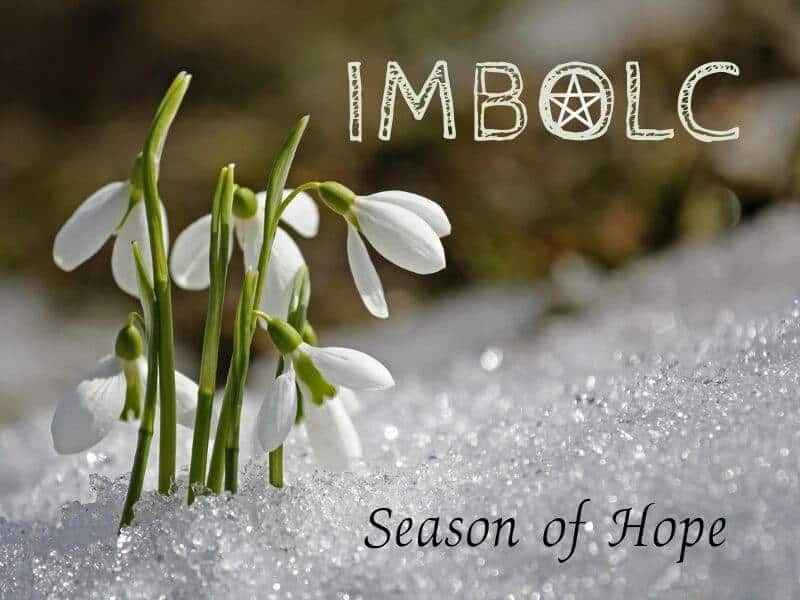
Imbolc marks the beginning of spring. By this date, the daylight hours become perceptibly longer and we anticipate the arrival of spring and new energy/growth.
Dates
Northern Hemisphere: February 2 (traditionally celebrated from sundown on Feb. 1 through sundown on Feb. 2.
Southern Hemisphere: August 1.
General Meanings and Themes
Imbolc represents hope and light returning to the world after the dark of winter.
Those living in southern latitudes may already see the first signs of spring while those of us further north will have to wait patiently until Ostara or Beltane before it begins to feel like spring.
While this holiday may not feel like the beginning of spring for many of us, it’s a time to put our Winter Solstice intentions to action. Spring clean, create action steps, and put some energy into your wishes and desires.
How to Celebrate.
Imbolc is a pretty low-key holiday for Tracy and I. Light candles to welcome the waxing sunlight.
Refresh your altar and your home to release stagnant energy and get it flowing again.
Imbolc is a time to gently ease yourself out of hibernation and awaken to new possibilities and hope.
Click here for a deep-dive into celebrating Imbolc, with ritual ideas and correspondences.
Ostara: The Spring Equinox
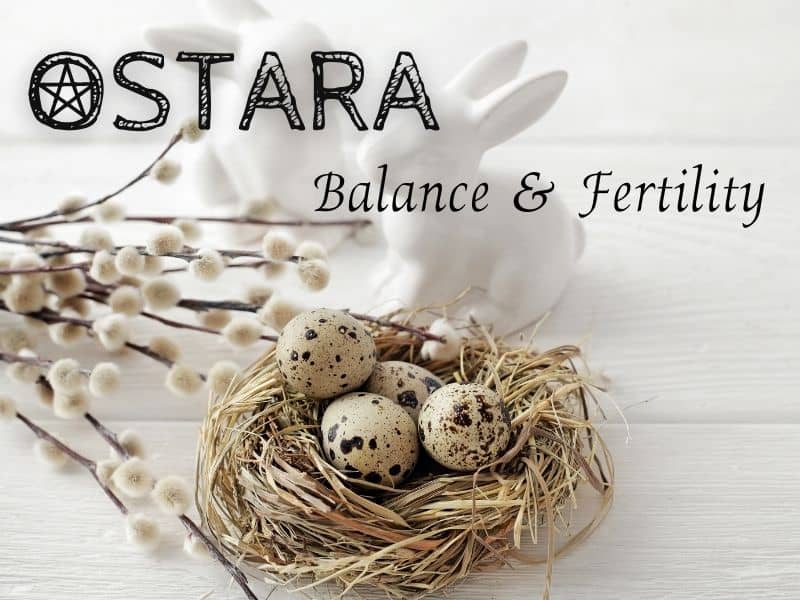
Ostara is the Spring Equinox, a time of balance, and the start of the “light half of the year” where there are more hours of daylight than darkness.
The modern Druid name for this holiday is Alban Elir.
Dates
Northern Hemisphere: Typically between March 19-22, on the day of the Spring Equinox.
Southern Hemisphere: Typically between September 19-23.
General Meanings and Themes
Ostara represents balance, but also rebirth, renewal, and nurturing of new life.
This is the date when spring feels like it has finally arrived as the first flowers of spring push up through the ground even with snow clinging on nearby.
There is a shift in activity as migratory birds arrive, and the balance tips away from winter and toward the rush of new growth and energy of spring.
How to Celebrate
Ostara shares many of the same customs as Easter. We paint eggs, and decorate with fertility symbols like rabbits/hares, birds/nests/eggs, and plant seeds (or put potted spring flowers like daffodils, tulips, or hyacinth on our altar.)
Ostara is the time to nurture your intentions and desires, and “fertilize” them with action steps.
Click here for a deep-dive into celebrating Ostara, with ritual ideas and correspondences.
Beltane
Beltane marks the beginning of summer, or (in my neck of the woods) high-spring.
Dates
Northern Hemisphere: May 1.
Southern Hemisphere: October 31.
Personally, I include Earth Day (April 22) and Arbor Day (April 28) in the “Beltane Season” as these two holidays remind us to reflect on our impact on the Earth and environment, and do our part to protect our planet.
General Meanings and Themes
Beltane is traditionally associated with fertility and abundance.
It is by this date that our yard is filled with baby geese grazing on fresh grass while their parents watch warily nearby. Birds are actively feeding young, and the evenings are filled with the chorus of frogs serenading their mates.
The theme of Beltane doesn’t need to be dominated by the theme of literal human or animal fertility. I like to reflect on the fertility of ideas or actions, and how tiny changes lead to incremental growth over time.
How to Celebrate
Traditional celebrations for Beltane include dancing around a Maypole, and lighting a huge bonfire.
I am usually at peak activity for preparing my garden. I’m nurturing the seedlings I planted weeks earlier, tending to them in my greenhouse while keeping a watchful eye out on potential frosts. At this point, I am two weeks from being able to plant things in the ground.
Garden and yard cleanup are great activities this time of year. Challenge yourself to “green up” a nearby trail, park, or your own street.
Click here for a deep-dive into celebrating Beltane, with ritual ideas and correspondences.
Litha: The Summer Solstice
Litha is the summer solstice, and marks the beginning of summer, or for some, Midsummer.
The modern Druid name for this holiday is Alban Hefin.
Dates
Northern Hemisphere: Typically celebrated between June 19-22, on the day of the Summer Solstice.
Southern Hemisphere: Typically celebrated between December 19-22.
General Meanings and Themes
The summer solstice represents abundance, celebration, and gratitude.
The daylight is longest at this point of the year. It’s a time to indulge and soak of the pleasure of all that summertime offers.
How to Celebrate
Bask in the glory, warmth, and light of summer. This is a season of play, so do something fun.
Visit a local swimming hole. Have a fire to honor the sun and all that it makes possible for us, as we cannot live without it. Surround yourself in wildflowers and just take in the sight of busy pollinators, birds, and other creatures that are active during high summer.
Click here for a deep-dive into celebrating Litha, with ritual ideas and correspondences.
Lughnasadh (aka: Lammas)
Lughnasadh is the first of three harvest festivals, with Mabon and Samhain being the other two. Lughnasadh is sometimes referred to as the “grain harvest”.
Another name for Lughnasadh is Lammas.
Dates
Northern Hemisphere: August 1.
Southern Hemisphere: February 2.
General Meanings and Themes
Lughnasadh represents the grain harvest, and so it is a festival of thanksgiving and welcoming abundance.
This is a time to evaluate what can be harvested now, and what needs pruning or nurturing to facilitate continued growth through the remainder of the harvest season.
How to Celebrate
Bake bread, or at the very least, buy a loaf of bread (or bread products) from a local baker and share the abundance with friends and families at a thanksgiving meal.
Friendly competition is encouraged at this time, so host a cookout or picnic where you can test your skills amongst your friends.
Walking up a hill or mountain to survey the surrounding lands is also a traditional activity at this time of year.
Click here for a deep-dive into celebrating Lughnasadh, with ritual ideas and correspondences.
Mabon: The Autumn Equinox

Mabon marks the beginning of autumn and is essentially a thanksgiving celebration and harvest festival.
The modern Druid name for this holiday is Alban Elfed.
As the balance between day and night tip toward night, Mabon begins the dark half of the year (from now through Ostara).
Dates
Northern Hemisphere: Typically celebrated between September 19-22, on the day of the Autumn Equinox.
Southern Hemisphere: Typically celebrated between March 19-22.
General Meanings and Themes
Mabon is a harvest festival that emphasizes gratitude, giving thanks, honoring the land (and sources of abundance in your life), while sharing this abundance with friends and family (typically with a feast or the sharing of your bountiful harvest.)
How to Celebrate
We celebrate Mabon (and the Mabon season) with typical autumn activities. We visit corn mazes, pick apples and pumpkins, enjoy apple cider, and bake apple pies.
There is nothing like walking through the woods as the trees change color and begin shedding their leaves. I absolutely love looking at the beautiful variety of mushrooms in the woods this time of year.
Click here for a deep-dive into celebrating Mabon, with ritual ideas and correspondences.
Samhain
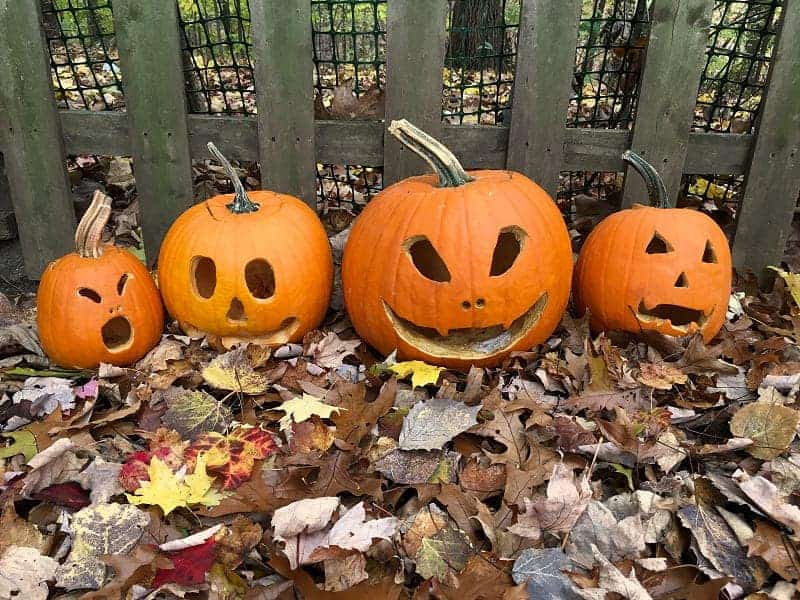
Samhain is the last of the harvest festivals, and typically marks the beginning of the winter season.
Dates
Northern Hemisphere: October 31.
Southern Hemisphere: May 1.
General Meanings and Themes
Samhain is the final harvest festival and with the final harvest, it is also a time associated with honoring those who have passed on.
Themes of death, afterlife, spirits and ancestors are ingrained in Samhain celebrations.
How to Celebrate
Tracy and I add photos of loved ones who have passed (as well as our ancestors, or representations of our ancestors) on our altar at this time of year. We reflect on their lives and our ancestral lineage.
We continue many of the same autumn activities that we do for Mabon – baking, corn mazes, etc…but add in the scary (and fun) parts of the season – visiting haunted houses, listening (and telling) ghost stories around the fire, and of course, taking our kiddo trick-or-treating.
Carving jack-o-lanterns is an annual tradition.
As it is the final harvest, we collect the last of what we can from our garden before putting it to bed for the winter.
Click here for a deep-dive into celebrating Samhain, with ritual ideas and correspondences.
Adjusting The Wheel Of The Year To Fit Your Location/Practice
The Wheel of the Year is a new creation born out of the modern pagan movement. While it incorporates some ancient Celtic, Nordic, and Germanic festivities, there is no evidence that any ancient culture observed all eight sabbats on the modern Wheel of the Year.
With that being said, the Wheel follows an agricultural calendar cycle centered in the UK, and based on a UK climate. Because of this, it may or may not line up with what is going on outdoors in your location.
For example, Imbolc often marks the start of spring, but in Upstate New York where we live, the first signs of spring come between Ostara and Beltane. Imbolc is still very much deep, mid-winter for us.
Feel free to adapt the holidays to fit your practice, beliefs, and location. The Wheel of the Year is NOT “law” or doctrine, so feel free to:
- Adjust dates or meanings to fit what is actually happening in the landscape around you at that time of year.
- Change the names as you see fit (ie: you don’t have to call it “Mabon” or “Ostara” or “Lughnasadh” if you don’t follow or resonate with Celtic/Germanic deities. Name the holiday something that resonates with you.
- Ignore agricultural associations. If that helps you connect to the land around you, great. If it doesn’t resonate, then find your own meanings for the holidays.
- Skip holidays that don’t resonate with you. Some pagans stick with the soltices and equinoxes. Others put more effort into holidays that line up with the over-culture (ie: Christmas – Yule and Halloween – Samhain, but not so much Beltane and Lughnasadh since there are no equivalent modern holidays that mark this time of year.
- Like I said, the Wheel is not a spiritual “to-do list.”
The purpose of the Wheel of the Year isn’t to give you some religious to-dos, or a rigid structure that you must conform to.
Instead, its purpose is to inspire and encourage you to tune into the natural cycles of the Earth, and connect to nature on a regular basis.
Further Reading – Our Favorite Wheel Of The Year Books & Resources
Lewellyn’s Wheel of the Year Almanac – I order this every year when it is released (usually by mid-summer). Each book features articles, rituals, cosmic happenings, and recipes for each sabbat beginning with Samhain.
Wild Wisdom Companion: A Guided Journey into the Mystical Rhythms of the Natural World, Season by Season – Maia Toll’s enchanted guide to the seasons of the year offers plenty of opportunities to reflect and deeply connect with the lessons in the cycles and rhythms of nature.
The Spirited Kitchen: Recipes and Rituals for the Wheel of the Year – A nice collection of recipes and ideas to help you release your inner kitchen witch through each season.
Spinning in Place: A Secular Humanist Embraces the Neo-Pagan Wheel of the Year – This book was my introduction to the Wheel of the Year from a humanist perspective.
Click here for more of a Druid perspective on the Wheel of the Year (from the Order of Bards, Ovates, and Druids (OBOD).
Naturally Curious: A Photographic Field Guide and Month-By-Month Journey Through the Fields, Woods, and Marshes of New England as well as Naturally Curious Day by Day are excellent resources for learning about what nature is up to all around you each month of the year. While focused on New England, this book is quite relevant for much of the Northeast and into the Midwest USA.